The Forest
in your cup.
This site grew out of my MSc graduation thesis — a deep dive into tea agroforestry, drawing on all the available data for tea grown beneath trees. The verdict? Yield can increase, and shaded leaves consistently carry more L-theanine — the amino acid behind tea's calm, focused effect. I want to share what I learned about this crop and its remarkable potential for more biodiverse cultivation systems. Sign up below to be notified — this summer I'm heading out to source tea from exactly the kinds of systems described here.

Fig. 1 — Linoprint: tea plantation with dotted trees breaking the symmetry of tended tea bushes
Tea is one plant.
Everything else is an infusion.
All tea — white, green, yellow, oolong, black, dark — comes from a single evergreen species: Camellia sinensis. Chamomile, rooibos, peppermint, hibiscus: those are herbal infusions, or tisanes. Beautiful drinks. Not tea.
What differs across the six varieties is not the plant but what happens between the leaf and your cup: how quickly it is heated, how long it is allowed to oxidize, whether microbes are invited in.
Understanding the leaf.
One plant, six families of processing. Each step — withering, fixing, oxidation, fermentation — is a fork in the road.
White
Sun-withered buds and young leaves, barely handled after picking.
Green
Heat-fixed early — pan-fired or steamed — to halt oxidation.
Yellow
Rare. A slow, sealed yellowing step follows the fixing.
Oolong
Bruised and partially oxidized, from light to deep.
Black
Rolled and fully oxidized before drying.
Dark
Post-fermented (Pu'er, Liu Bao). Microbially aged, sometimes for years.
Camellia sinensis sinensis · Camellia sinensis assamica
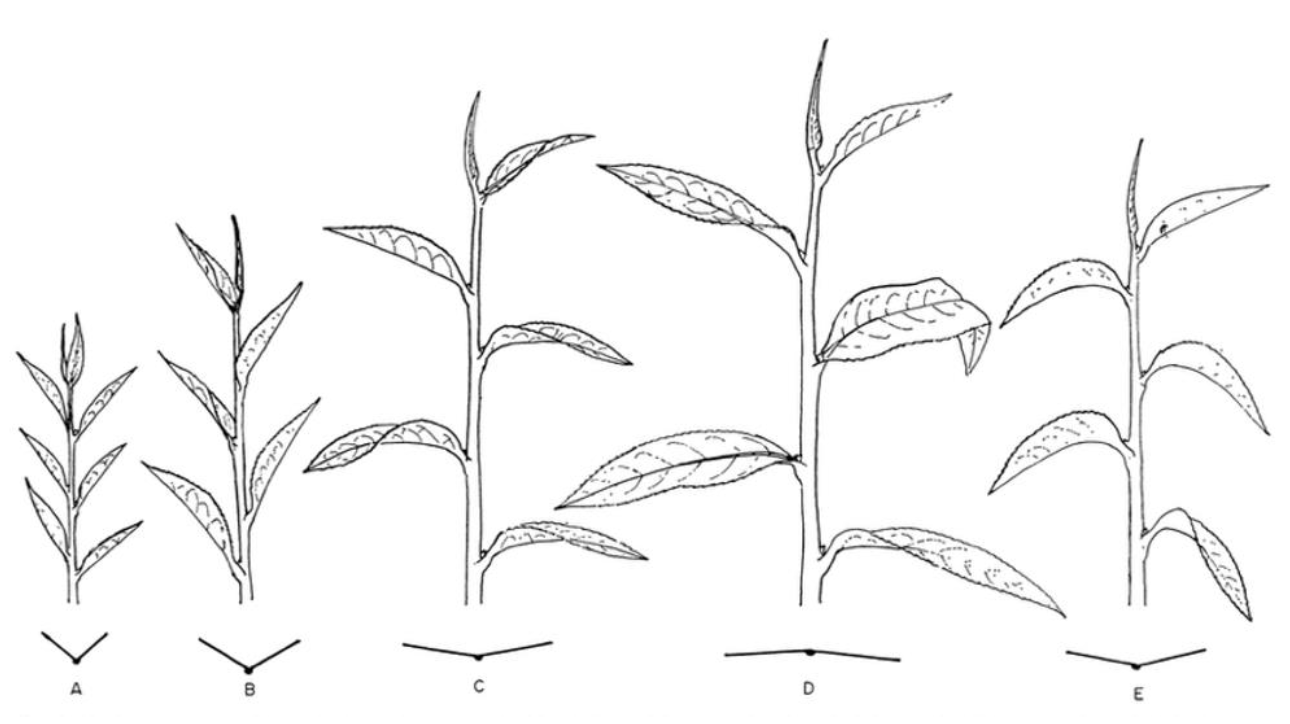
Source: Hadfield, W. (1974). Shade in North-East Indian tea plantations. II. Foliar illumination and canopy characteristics. Journal of Applied Ecology, 11(1), 179–199. https://doi.org/10.2307/2402013
Camellia sinensis sinensis is from China, where it has already undergone thousands of years of use and potential breeding — thus it is associated with China overall. Camellia sinensis assamica was officially discovered in the 19th century in Assam, which gave it its name, but it naturally occurs across a broader corridor: Assam, Yunnan, northern Myanmar and into Thailand. It was probably used by native peoples long before its formal discovery. Two varieties of one species, shaped by different landscapes.
Teas and trees.
Trees are not merely a backdrop to agriculture — they are active participants. Their canopy alters temperature, humidity, and light beneath them, creating a microclimate that buffers crops against heat and drought. Leaf litter and root networks cycle nutrients back into the soil, while branches and trunks offer shelter to birds, insects, and the microbes that keep an ecosystem functioning. For tea, these services translate into cooler growing conditions, richer soil, and a more resilient system overall.
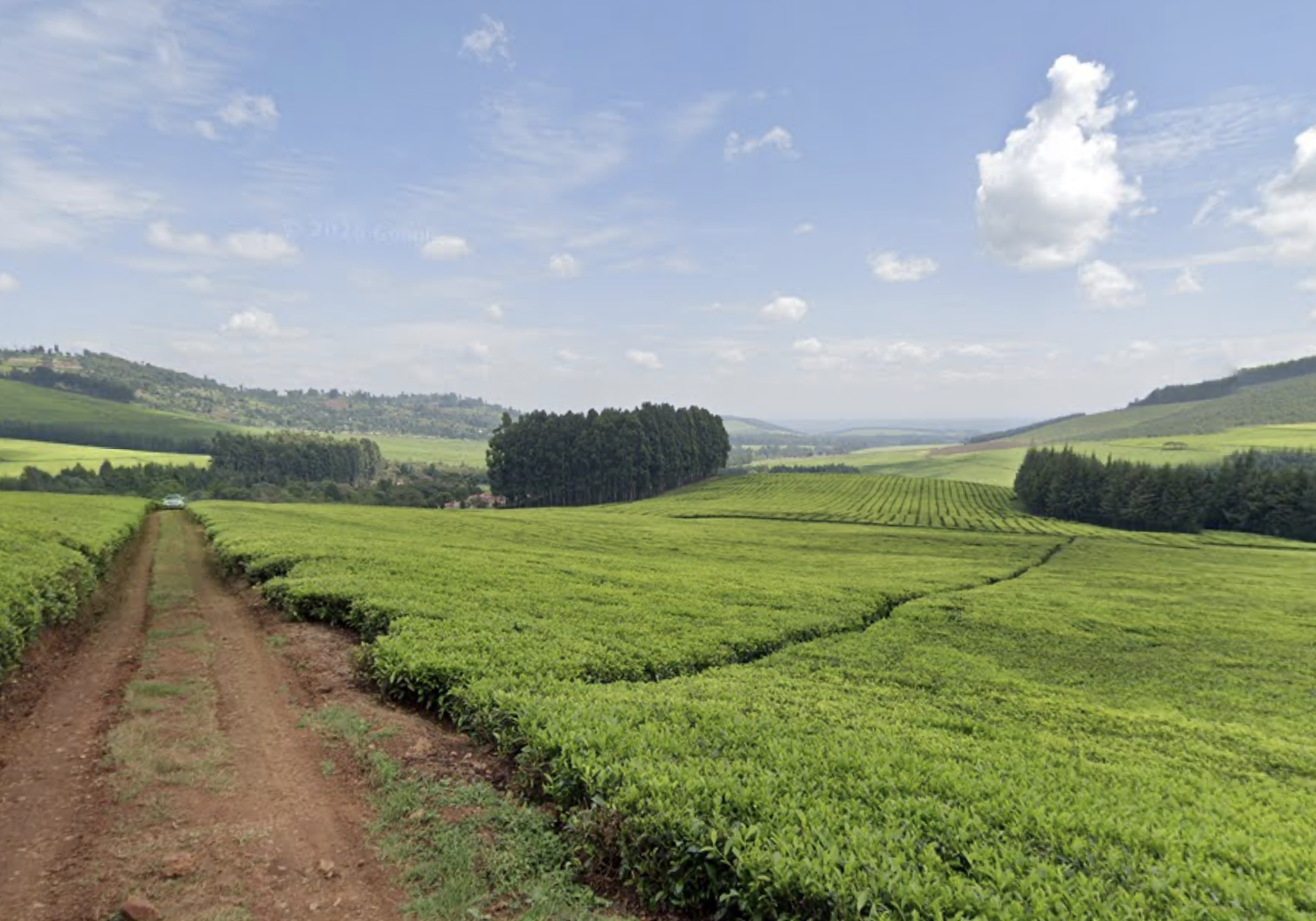
Google. (2022). Street View image of Nyamira County, Kenya [Photograph]. Google Maps. https://www.google.com/maps
Industrial tea is a monoculture: tight rows of clipped bushes, no shade, heavy inputs. Agroforestry restores what was lost — taller native trees overhead, leaf litter underfoot, birds and insects between.
Agroforestry is simply the integration of trees into agricultural production — while their exact purpose in these systems can vary enormously. Some trees give only shade; others bear fruit or nuts. Certain species, such as leguminous shade trees, form symbioses with soil bacteria that pull nitrogen from the atmosphere and fertilise the ground beneath them.
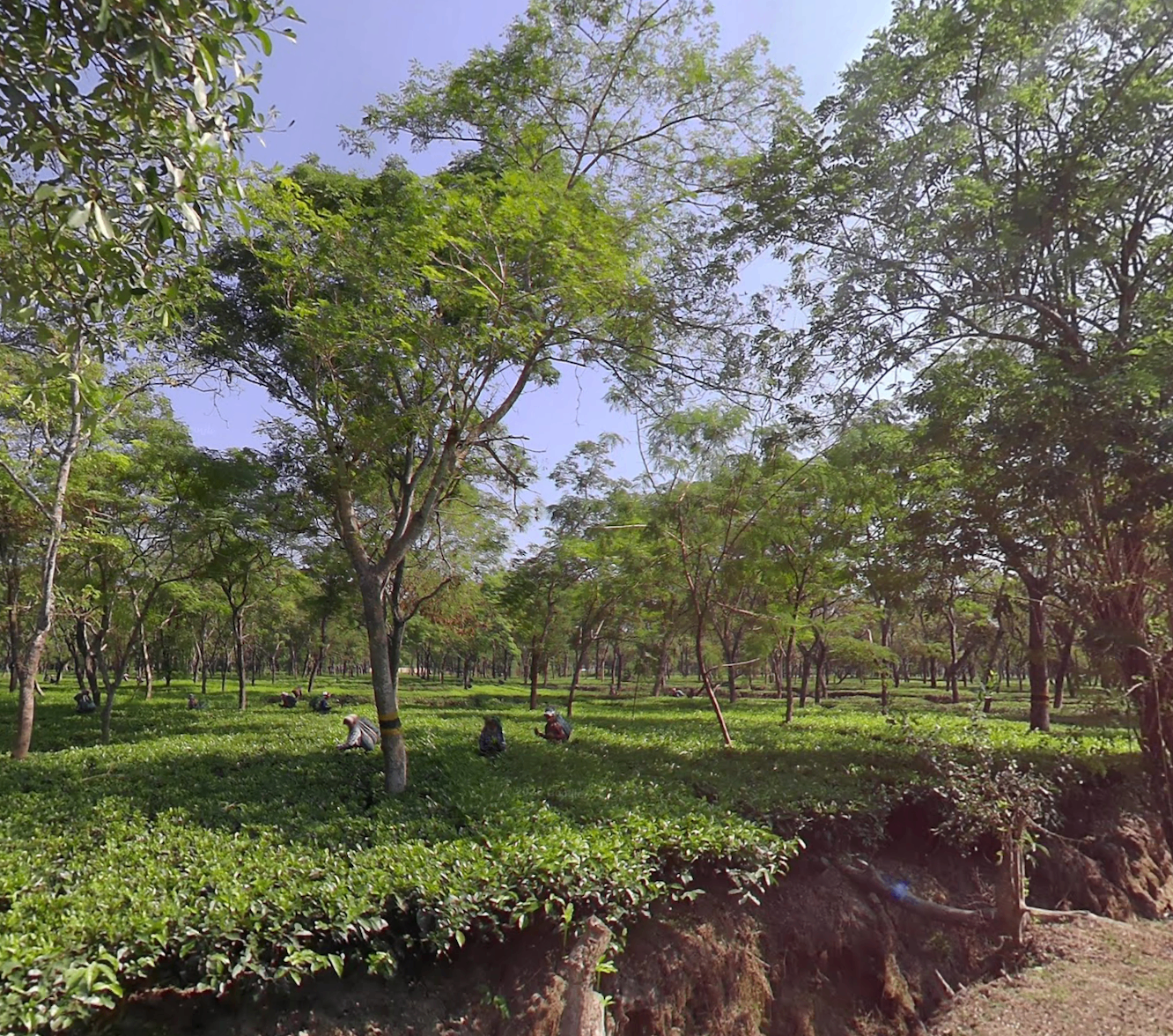
Google. (2023). Street View image of Gorbasti Assam, India [Photograph]. Google Maps. https://www.google.com/maps
And agroforestry is not one system but many. On large plantations — many of them rooted in colonial-era estates — it often means rows of a single shade tree species above the tea. Smallholder farms, by contrast, tend toward far richer mixes: tea grown under rubber trees, waxberry, pecan, or persimmon, with nitrogen-fixing shrubs and timber trees layered in. Then there are the accidental forests: in Georgia, vast tea gardens planted as monocultures for the Soviet Union were abandoned after its collapse and have since rewilded into something functionally indistinguishable from deliberate agroforestry.
At the far end of the spectrum lie the ancient indigenous systems — true forest gardens tended for centuries by communities who live inside them. Left unmanaged, Camellia sinensis assamica grows into a tree, and in these systems it does exactly that: wild forests with tea bushes and tea trees coexisting among hundreds of other species, shaped by human care but never reduced to it.
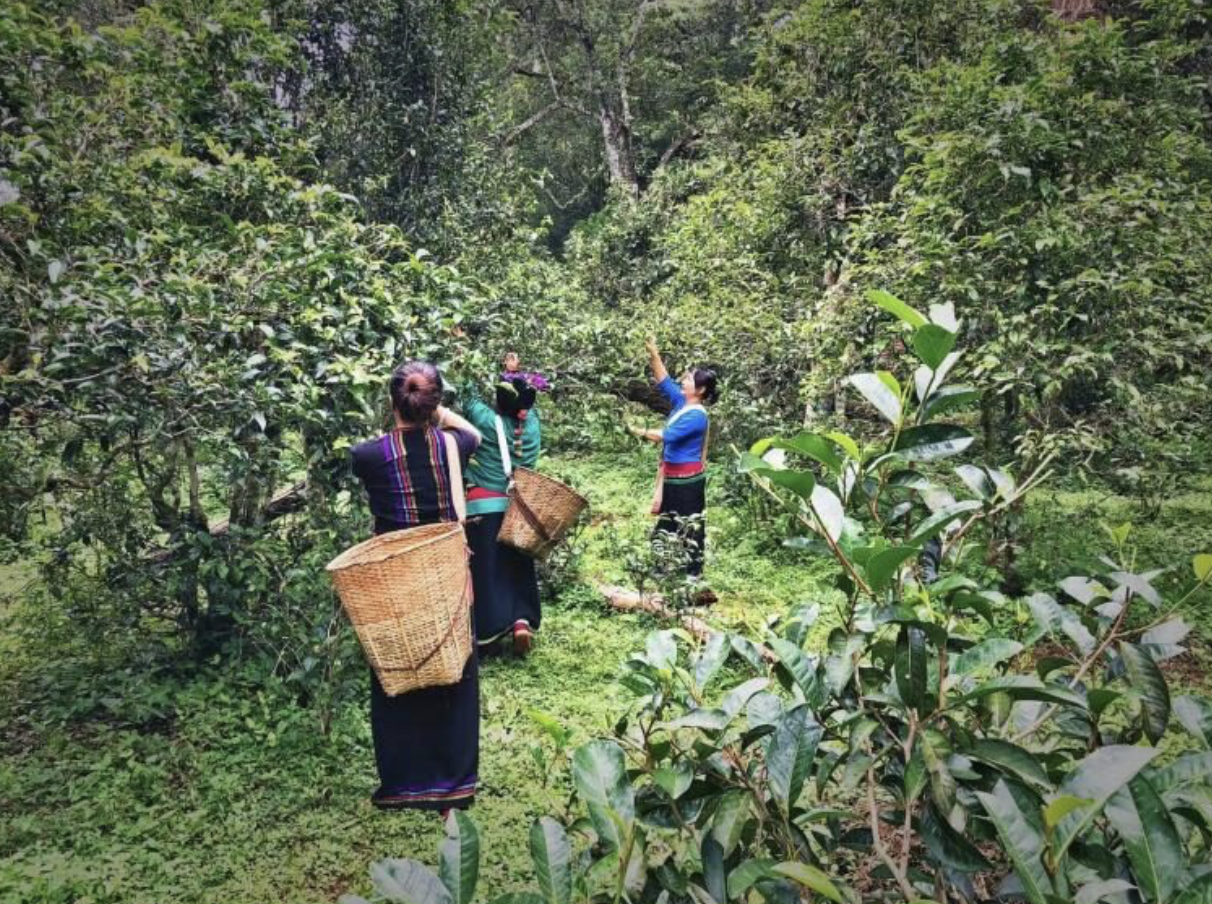
Photo by Zeyuan Wang / Planet Forward.
What the meta-analysis
actually shows.
Full paper pending publication.
The myth that agroforestry costs yield does not survive the data. The Camellia sinensis var. assamica in particular thrives under cover, and tea grown in warmer climates benefits far more from shade than tea grown in cooler highlands. As the climate warms, agroforestry becomes part of the solution.
Amino acids are what make tea taste sweet and feel calm, and in tea leaves almost all of them are L-theanine — a compound with a measurable calming effect. Shaded leaves consistently carry more of it, which is exactly why Japanese growers cover their matcha bushes with shade nets for several weeks before harvest. Trees can do the same work, year-round, while building soil and habitat underneath.
The benefits stack beyond the leaf: carbon sequestered in tree biomass, richer biodiversity, more resilient systems, and income diversification for farmers who harvest nuts, fruit, or timber alongside their tea.
As climate change tightens its grip on the tropics, agroforestry is shifting from a heritage practice to a strategic adaptation technique — one of the few tools that protects yield, leaf quality, and livelihoods at the same time.
Next, the harvest.
I am working to source tea from small-scale growers whose bushes grow among trees — in the kind of biodiverse, shaded systems described here. A limited first batch will be made available for direct purchase. Leave your email to be told when, and from where.
No spam. Only updates from the field.